
Blog
Do You Really Need Biometric Time Tracking? Here’s the Truth for 2026

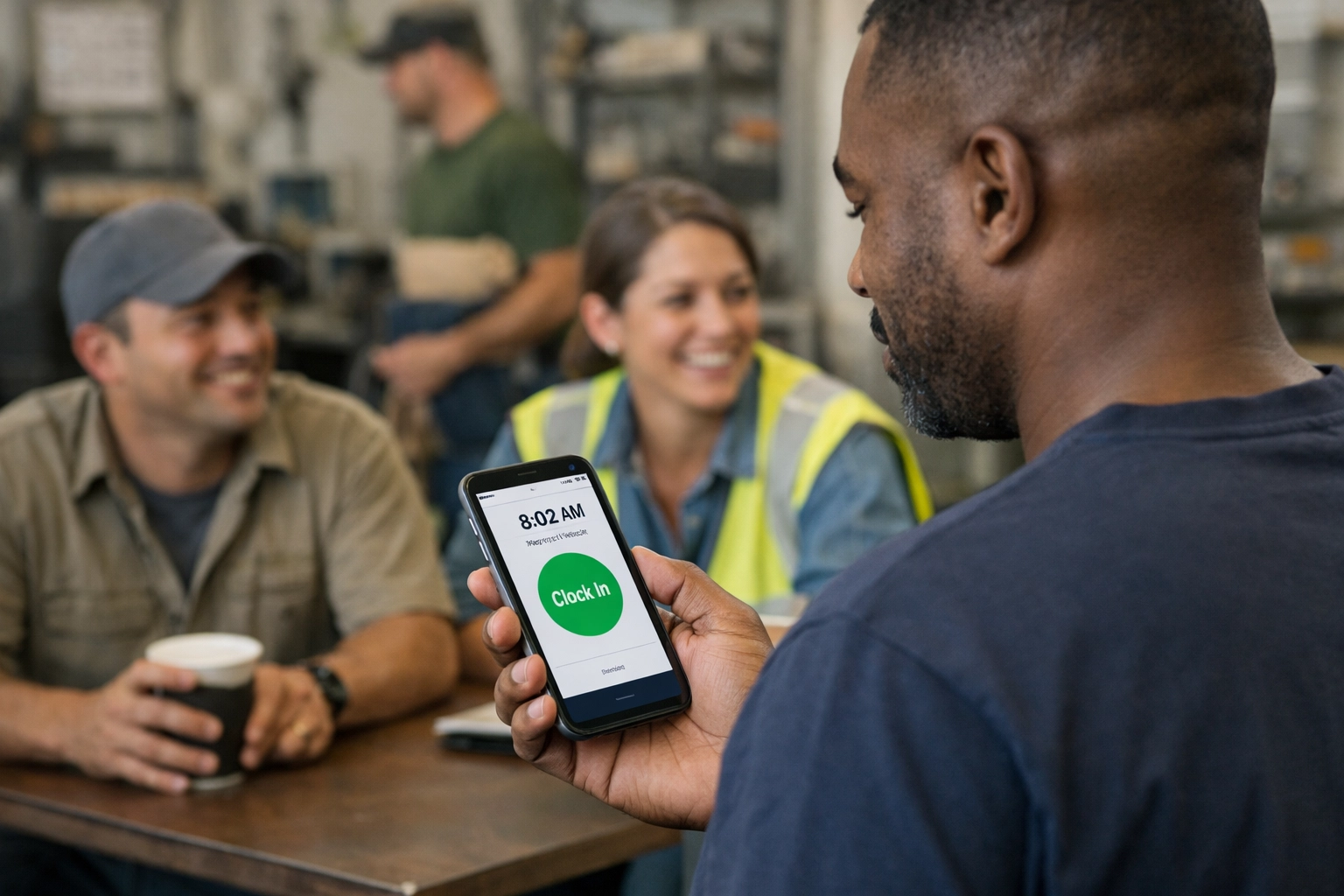
It is 2026, and the traditional "honor system" for employee attendance has officially moved from a charming relic of the past to a massive financial liability. In an era where every second is accounted for and every dollar of labor cost is scrutinized, the question isn’t just about if you should track time, but how you verify it. Your business is likely sitting on a goldmine of data, but if that data is corrupted by "buddy punching" or manual errors, your Workforce Analytics Software is essentially useless.
So, do you really need biometric time tracking this year?
The short answer is: If you manage a team that doesn't sit at a desk all day, the answer is a resounding yes. But forget everything you know about clunky wall-mounted thumbprint scanners and specialized hardware. The technology has undergone a total revolution.
The Staggering Reality of Labor Leakage
Let’s talk numbers, because the math behind time theft is frankly staggering. Research consistently shows that "buddy punching": the practice of one employee clocking in for another: affects roughly 75% of all employers in the United States. This isn't just a minor annoyance; it accounts for a 3% to 5% loss in total payroll costs annually.
Can your bottom line really afford a 5% "fraud tax" every single month?
For most businesses, that 5% represents the difference between a record-breaking quarter and just breaking even. When you implement high-fidelity biometric verification, you aren't just "watching" your employees; you are securing your payroll and ensuring that your Labor Cost Analysis is actually rooted in reality.
The Evolution: AI Facial Recognition vs. The Old Guard
In the early 2020s, biometric tracking was a bit of a nightmare. You had to buy expensive, proprietary hardware, mount it to a wall in a central breakroom, and pray the sensors didn't get too smudged to read a fingerprint. If you managed a remote team or people working at various job sites, you were basically out of luck.

Fast forward to 2026, and the game has changed. We’ve moved away from specialized hardware and into the era of Workforce Intelligence. Today’s cutting-edge biometrics rely on AI-driven facial recognition that runs on the devices your team already has in their pockets.
The "Old Way":
- Expensive hardware installations.
- Hygiene concerns (everyone touching the same sensor).
- Centralized locations only.
- High maintenance costs.
The "2026 Gander Way":
- Software-based facial recognition using standard smartphones.
- Touchless, hygienic, and lightning-fast.
- Works anywhere: from a distribution hub to a remote job site.
- Integrated with Real-Time Employee Tracking to ensure people are where they say they are.
By leveraging the power of modern mobile devices, you can achieve 100% verification without the "big brother" hardware vibe. It’s about making the process frictionless for the employee while providing ironclad documentation for the business.
Why Verification is Your Best Legal Defense
If you’re operating in a litigious environment: especially in states with strict labor laws like California: accurate documentation is your only shield. We’ve seen a massive surge in PAGA (Private Attorneys General Act) lawsuits and meal-break violations that can bankrupt a mid-sized company overnight.
When a legal challenge hits, do you want to rely on a handwritten log or a verified, biometric digital signature?
Using an Employee Intelligence Platform creates a "digital paper trail" that is virtually impossible to dispute. When an employee clocks out for a meal break and confirms their identity via a quick facial scan, you have captured a moment of truth. This level of compliance and risk management is why biometrics have become the gold standard for 2026.
Maximizing Efficiency with Workforce Analytics Software
Biometric data doesn’t just stop "time theft"; it fuels the insights you need to grow. When your time tracking is 100% accurate, your Time Tracking Data Analysis becomes a precision instrument. You can see exactly where labor hours are being over-allocated and identify top performers who are consistently on-site and on-task.

This is where Employee Productivity Insights come into play. If you notice that specific job sites or teams are consistently hitting their milestones while staying within their labor budget, you can look at the biometric data to understand the patterns of success. Conversely, you can spot "red flags" before they become disasters.
If you’re managing a dispersed team, you might also want to look into why geofencing should be on your radar. Combining geofencing with biometric verification is the "one-two punch" of modern remote workforce management. You know exactly where they are and who they are, every single time.
Addressing the Elephant in the Room: Privacy
We get it. The word "biometric" can sometimes make employees nervous. In 2026, transparency is your best friend. Modern systems like Gander don't store "photos" of employees in a traditional sense; they create a mathematical map of facial features that cannot be reversed into a picture.
How do you explain this to your team without the drama?
It’s about framing the technology as a tool for fairness. Biometric tracking ensures that the hard-working employees who show up on time aren't subsidizing the ones who are having their friends punch in for them. It ensures everyone gets paid accurately for every minute they work: no more, no less.
For more tips on handling this, check out our guide on navigating employee concerns around privacy. When employees realize that this technology protects their paychecks and simplifies their workday, the "creep factor" disappears.
The ROI of "Right Now"
If you are still using punch cards, spreadsheets, or even simple mobile apps without verification, you are leaving money on the table. The return on investment for biometric Remote Workforce Management Software is often realized within the first 90 days.
Think about it:
- Eliminate Buddy Punching: Save 3-5% on payroll instantly.
- Reduce Administrative Burden: Automate the verification process and slash payroll prep time by up to 50%.
- Prevent Litigation: Avoid the multi-million dollar "gotcha" lawsuits by having maximized compliance.

Is It Time to Make the Switch?
The technology has reached a point of total maturity. In 2026, biometric time tracking is no longer a luxury for the Fortune 500: it is a foundational tool for any business that values accuracy, efficiency, and growth.
By moving to an AI-driven, hardware-free biometric system, you’re not just tracking time; you’re building a culture of accountability and precision. You’re seizing control of your labor costs and giving your management team the Workforce Intelligence they need to lead with confidence.
Ready to see how Gander can revolutionize your operations? You can start with a free trial or explore our time-tracking solutions to see which approach fits your unique business needs.
The journey toward a more profitable, compliant, and transparent business starts with a single, verified click. No drama, no expensive hardware: just the truth. You’re good to go.